

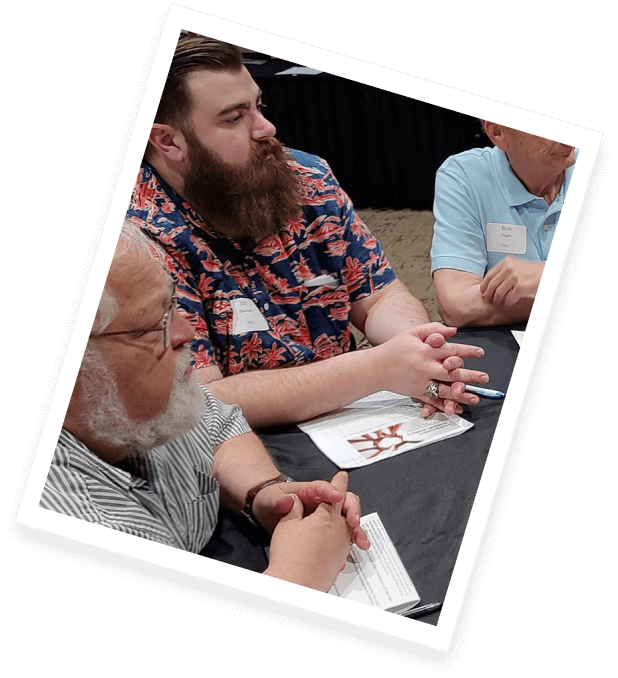
This is a challenging time to be in ministry. Statistics show that some new pastors will drop out of the ministry in their first five years. Many of our pastors feel isolated and alone.
In an effort to change those statistics, the Massachusetts Conference of the UCC, funded by the Lilly Endowment, began the Pastoral Excellence Program in 2003. This program is designed to bring together people of shared interests in peer learning groups called Communities of Practice. Today across the UCC more and more conferences are introducing this program in their settings, bringing together authorized ministers for support and learning.
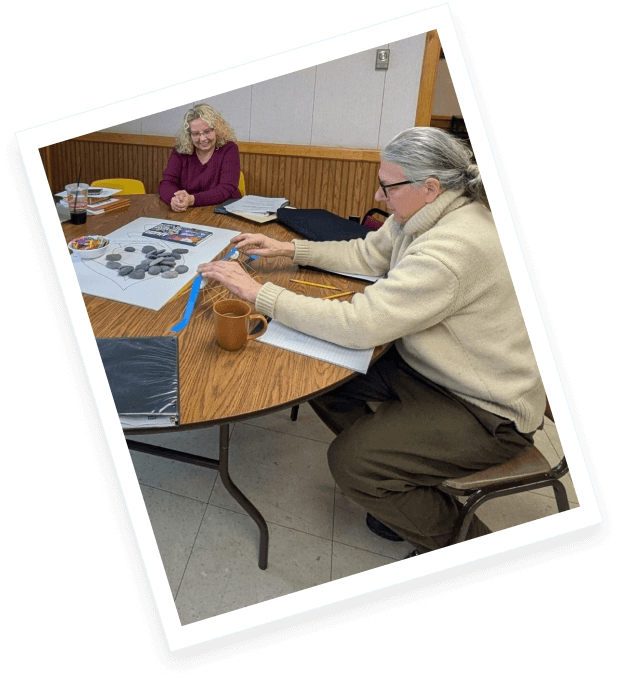
Each Community of Practice develops a group covenant describing their focus. They are facilitated by a respected peer and honor the “wisdom in the room.”
In this challenging time in ministry, these groups help to strengthen our clergy and, in doing so, will strengthen our congregations and their ministry.
There is a fee of $250 per year for participants that covers the cost of the facilitator and any other expenses. We ask our congregations to pay this fee for their clergy or for any lay member who may be working in their congregations. We have limited scholarship funds if needed. We believe that this will be money well spent!
The Keystone Conference Communities of Practice run on a calendar year, with new groups forming in the fall to meet from January through December. Keep an eye on the conference emails for registration links in October or November.
In order to keep groups stable and allow for trust-building among members, we attempt to keep groups consistent throughout the year. There may be exceptions – especially for newly authorized clergy or for clergy who have recently taken a new position within the Conference. If you would like to join a Community of Practice mid-year, contact your Regional Conference Minister to discuss that possibility.
Some criteria for facilitators include:
Each year a few new facilitators are needed for the program. In addition to the criteria above, we may need to find facilitators with a specific skillset, who live in a particular region, or even who have personality traits that would help them to fit with an existing group. For these reasons, not all requests to facilitate a group can be accommodated. If you are interested in facilitating, contact your Regional Conference Minister.
Conference leaders believe that the educational components of Communities of Practice do provide continuing education for authorized ministers. With that in mind, participants will receive a certificate at the end of the year with the number of hours they have spent in their group. It is up to each Association’s Committee on Ministry to determine whether they will accept that as Continuing Education or not. If this is a concern, please speak with your Committee on Ministry chair before joining the Community of Practice.
We believe there is a place in the life of an active authorized minister for many types of clergy groups. What makes Communities of Practice unique is their dual focus on clergy support and growth in a trusted, confidential community. The central purpose of meetings is to gain support and learning, and engage in a focused reflection of questions, problems, and joys in ministry with a balance between the personal and practical. Members are not meant to give advice, but to share wisdom and grow together.
A limited amount of scholarship funds is available for participation in Communities of Practice if the need arises. Our hope is that churches will pay the full amount for their pastors’ participation in Communities of Practice. For times when churches refuse or are not able to pay, for clergy who are between churches, or for retired pastors, they may request scholarship funds by speaking to their Regional Conference Minister.